Taste Is the Last Human Interface
Taste Is the Last Human Interface
AI made software faster to create. You can generate a landing page, dashboard, CLI, logo direction, launch copy, or React component in minutes. That is amazing. It is also why so many products are starting to feel like they came from the same place.
Same shadcn components. Same gradients. Same icons. Same glass cards. Same copy that sounds correct but has no pulse. The output works, but it often feels like nobody actually chose it. When everything can be generated, taste becomes the last human interface. Not taste as in making things pretty. Taste as the internal standard that decides what deserves to exist, how it should feel, and when it finally carries your mark.
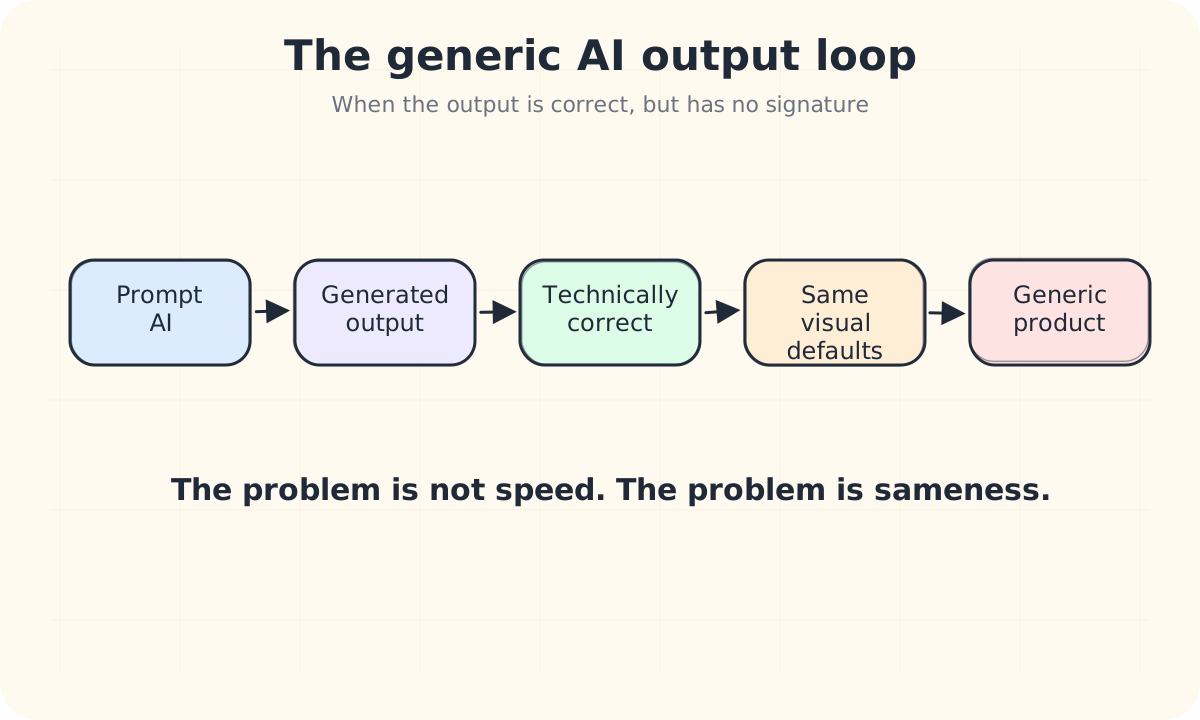
The bottleneck is feeling when something is not it
The new bottleneck is not whether you can make something. It is whether you can feel, with enough clarity to keep going, when something is still not it.
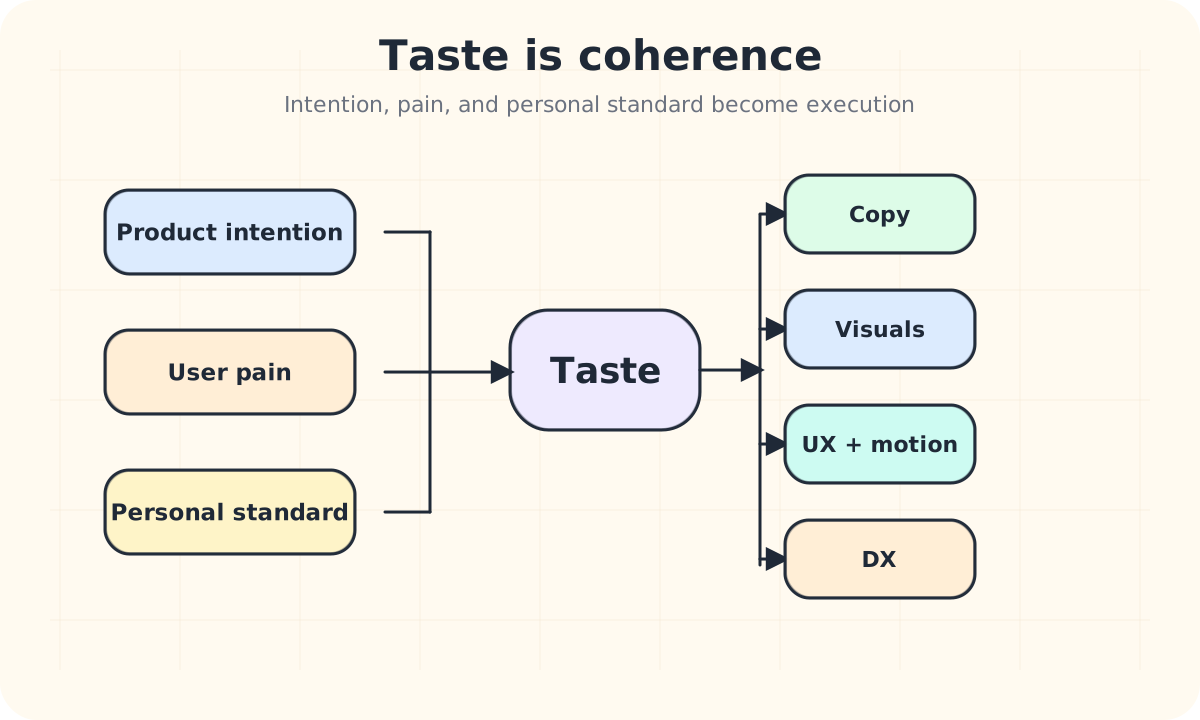
Taste is coherence. A good landing page does not recreate the product literally. It translates the feeling of the product into something people can read, see, and remember.
Copy, visuals, motion, UX, and DX should feel like they came from the same intention. In software, taste also shows up in smaller places: the shape of an API, the way a CLI behaves when you are tired, a hover animation that feels alive, or a microinteraction that removes a step you did not realize was heavy.
Taste is coherence between intention and execution.
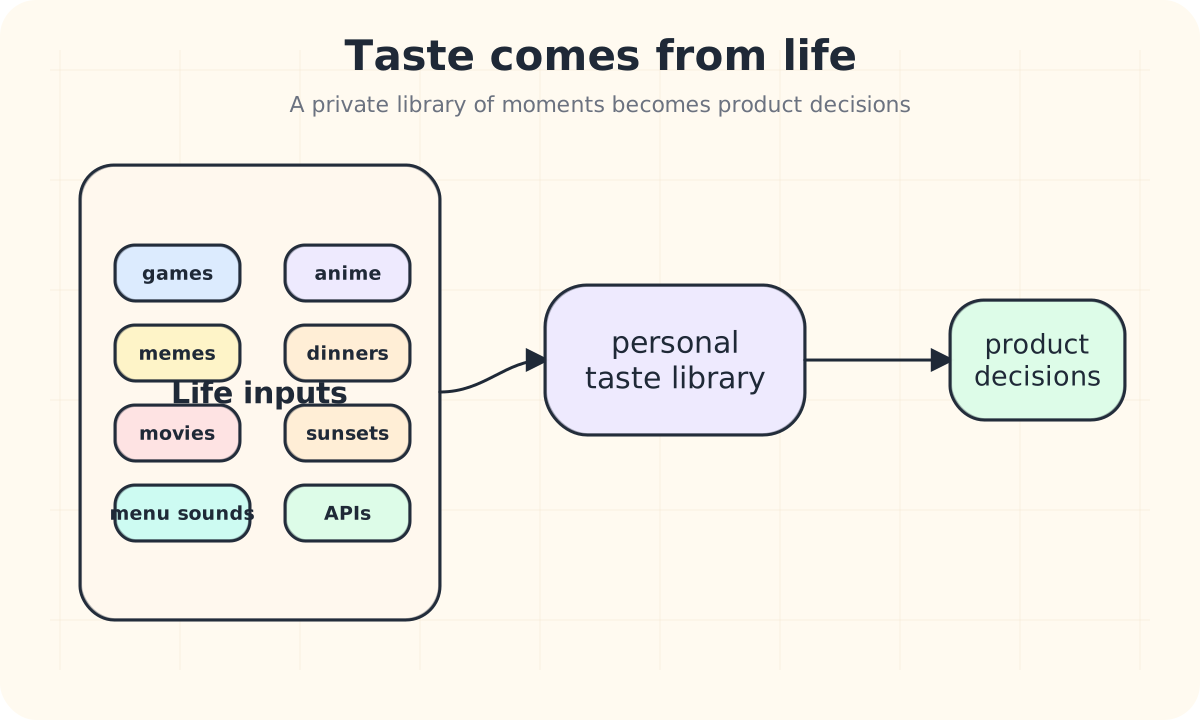
Taste comes from life, not only references
Taste does not only come from looking at other websites.
It comes from games, anime, memes, dinners with friends, movies, sunsets, menu sounds, and the products that stayed in your head longer than they needed to. Those things become your private library.
Later, when you are building, that library comes back in small decisions: the rhythm of a sentence, the weight of a font, the confidence of a color, the silence between animations, and the moment where you delete a section because it is trying too hard.
That is why taste cannot be fully copied. You can copy a visual style, a component, or a layout, but you cannot copy the life that made someone choose it.
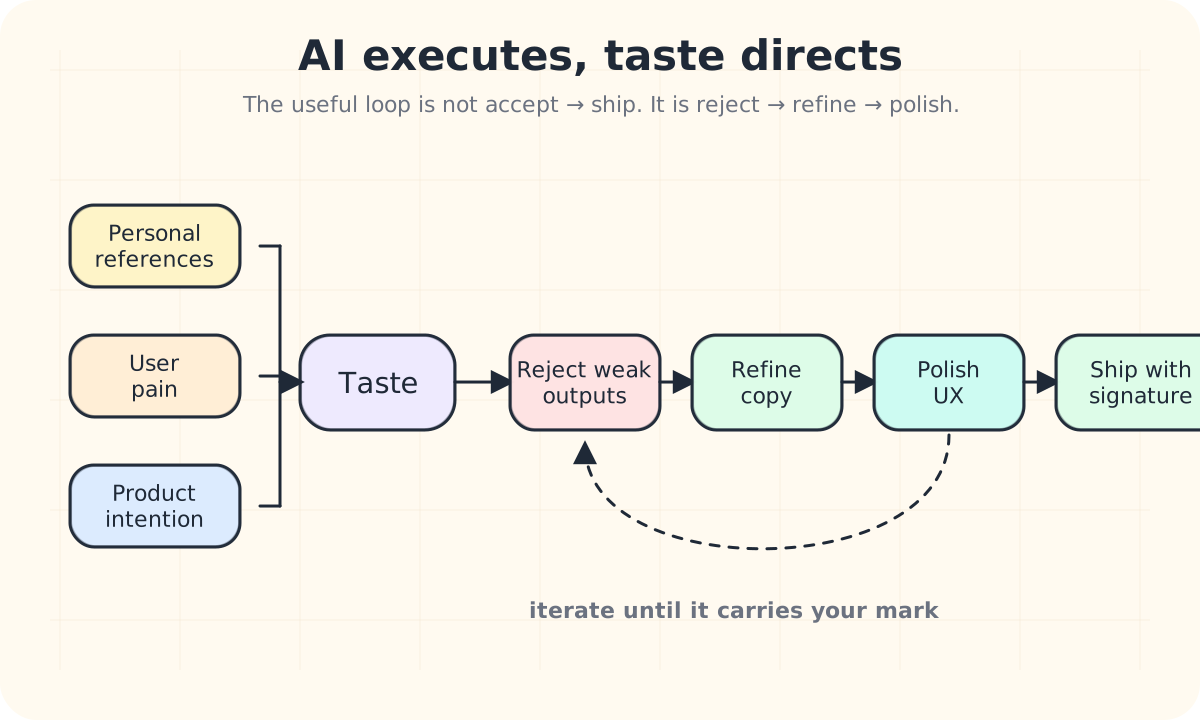
AI executes, taste directs
AI is trained on things that have already been done, so it is incredibly useful but naturally average if you let it drive.
It can assemble the blocks of what you want to create. It can decide whether to use Tailwind, an animation library, Three.js, a certain structure, or a specific implementation detail. But the desire has to come from you: the product story, the animation idea, the copy direction, the feeling you want someone to have, and the standard that says this is not ready yet.
The best use of AI is not accepting the first output. It is rejecting weak outputs, improving wording, polishing UX, and iterating until the thing stops feeling generated and starts feeling intentional.
Fine is not enough if the words have no owner.
Taste makes the software carry more weight
This applies to product decisions too.
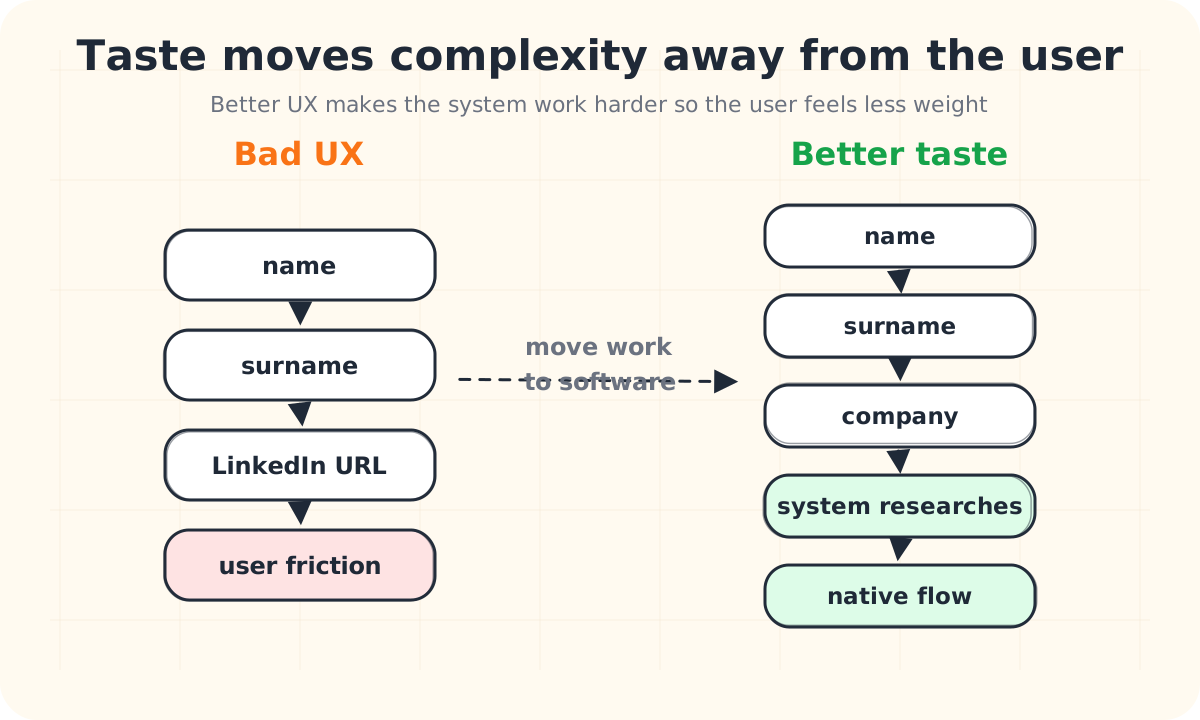
A form that asks for LinkedIn might satisfy the system. A better flow asks for company, then lets the software research behind the scenes. The user does not want to fill a perfect form. They want to be done.
Taste often means making the software work harder so the user feels less weight.
Ready to ship means it carries your mark
Ready to ship does not mean the thing works. It means the full user story is complete and it does not feel heavy to repeat.
If the copy sounds like AI wrote it, keep iterating. If the OG does not sell the idea, keep iterating. If the page explains the product but does not make anyone feel anything, keep iterating.
This is not perfectionism forever. It is knowing the difference between unfinished and intentionally simple. Simplicity with taste feels calm; laziness disguised as simplicity feels empty.
To develop taste, pay attention to what stays with you. A sound. A game menu. An anime fight scene. The pacing of a movie. A restaurant that makes dinner feel effortless. A meme that says more with one image than a landing page says with ten sections.
Ask why it worked. Was it timing? Contrast? Wording? Silence? Color? Did it respect your attention? Did it make a complex thing feel obvious?
Then build, compare, reject, refine. Copy things to understand them, but do not stop at copying.
AI can make building faster, but it cannot live for you. So experience life, pay attention to what stays with you, and let those references become part of how you build.
When software becomes easier to generate, taste is what can still make it feel human.
Read the full essay: Taste Is the Last Human Interface.