Taste Is the Last Human Interface
Taste Is the Last Human Interface
AI made software faster to create. That part is obvious, and in many ways it is amazing. You can generate a landing page in minutes. You can ask for a dashboard, a social media post, a hero section, a form, a CLI, a logo direction, a color palette, a React component, launch copy, and it will give you something that is usually fine. That is also where the problem starts.
A lot of products are starting to feel like they came from the same place. Same shadcn components. Same colors. Same icons. Same gradients. Same copy that sounds correct but has no pulse. Same product screenshots floating in the same glass card with the same glowing background.
The output works, but it often feels like nobody actually chose it. Nothing is technically wrong, yet the product still carries that strange default smell: generic structure, generic confidence, generic decisions.
And when everything can be generated, taste becomes the last human interface. Not taste as in making things pretty, or as a luxury layer you add at the end. Taste as the internal standard that decides what deserves to exist, how it should feel, and when it finally carries your mark.
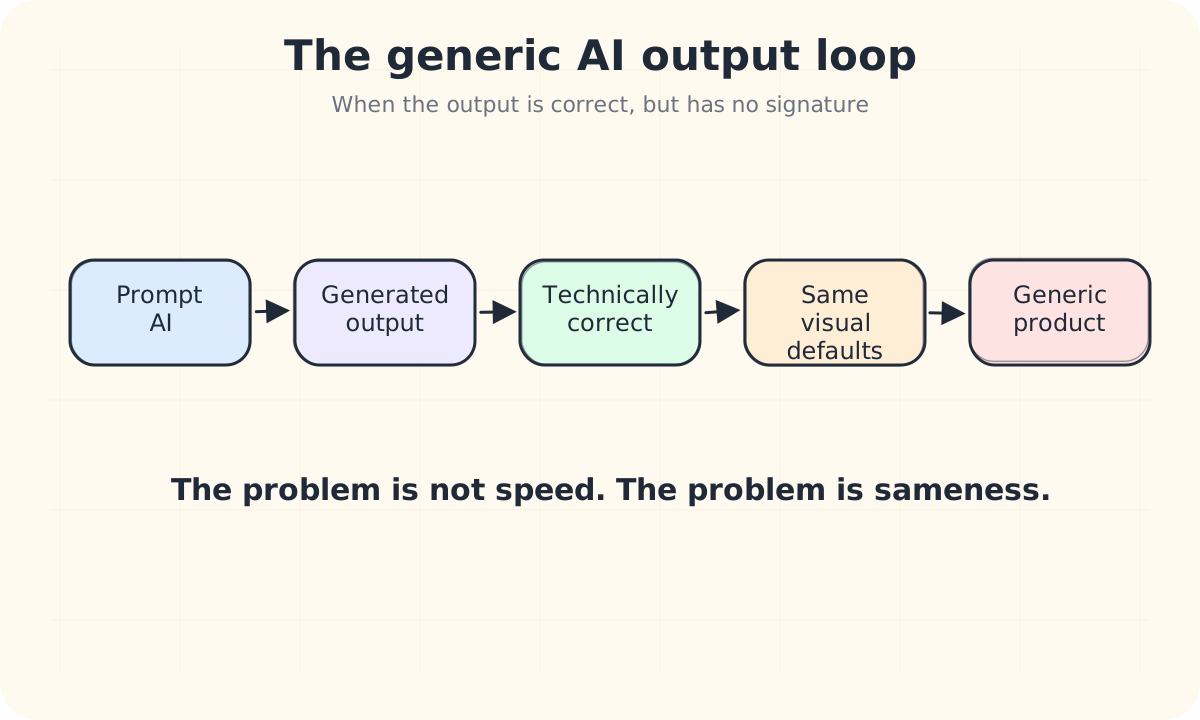
The new bottleneck is not whether you can make something. It is whether you can feel, with enough clarity to keep going, when something is still not it.
Taste is coherence
When I look at a landing page with taste, I notice how well the product is described and how naturally the visuals support the message. The graphics are not there because some trend said every startup needs 3D blobs, grain, gradients, or floating cards. They are there because they make the product easier to understand. They abstract the product into a story.
A good landing page does not need to recreate the product literally. It needs to translate the feeling of the product into something people can read, see, and remember. That translation is taste.
In software, taste shows up differently. It is the organization of a codebase. The shape of an API. The cleverness of a solution that feels obvious after you see it. The way a CLI behaves when you are tired. The way a feature removes a step you did not even realize was heavy.
Inside a product, taste becomes smaller and more physical: a hover animation that feels alive, a transition with the right easing, a piece of copy that lands in the user's mind and makes them think, of course I need this, or a microinteraction that feels so natural it becomes the standard.
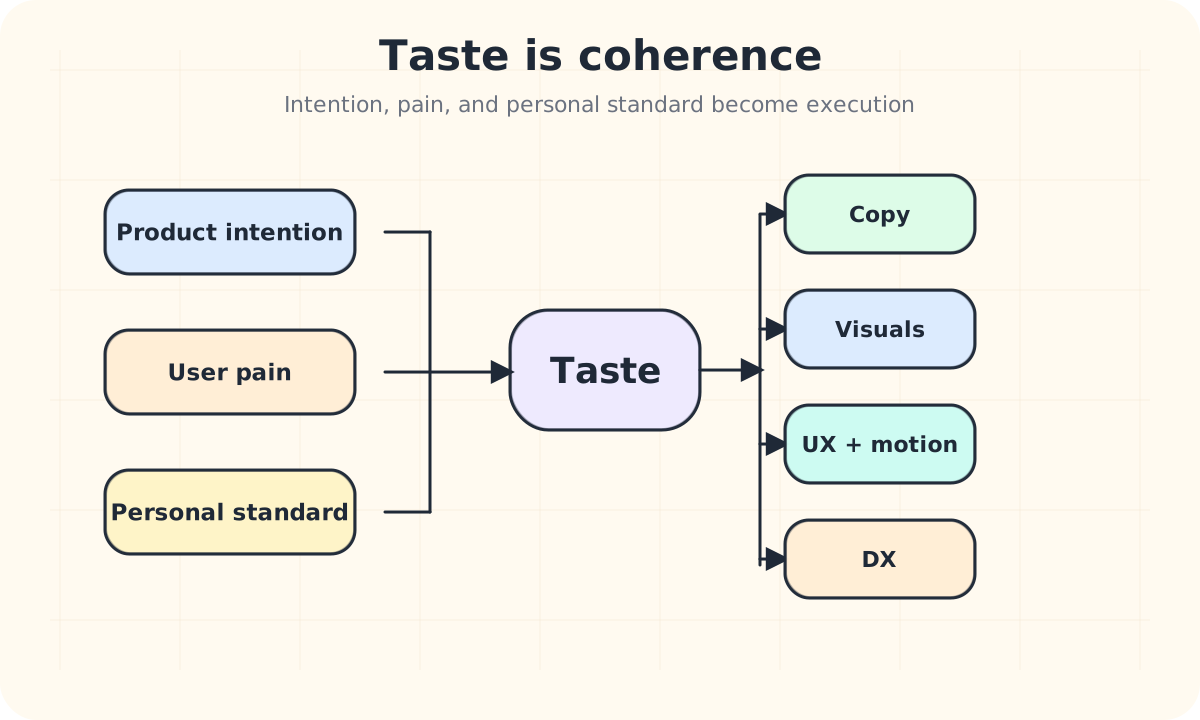
Taste is not decoration. Taste is coherence between intention and execution.
Taste comes from life
The mistake is thinking taste only comes from looking at other websites. Of course references matter: Vercel, Basement Studio, Supabase's API, Exa, Firecrawl, the Messenger experiment by Abeto, Mammut's Eiger Extreme experience. Those are the kinds of pages where every scroll feels like another part of the same story, not just another section someone had to include.
But taste also comes from outside software, from the things that trained your attention before you ever opened a design file.
Games, anime, memes, dinners with friends, Cyberpunk 2077, The Witcher, Jujutsu Kaisen, Attack on Titan, Demon Slayer, Interstellar, Oppenheimer. A main menu sound from Assassin's Creed that still brings back a memory years later. The specific orange and pink of a sunset that makes a normal day feel cinematic.
Those things become your private library. Not a Notion database or a moodboard, but something deeper: a collection of moments that triggered something inside you.
And later, when you are building a product, that library comes back in small decisions. The rhythm of a sentence. The weight of a font. The confidence of a color. The silence between animations. The moment where you decide a section is trying too hard and delete it.
That is why taste cannot be fully copied. You can copy a visual style, a component, or a layout, but you cannot copy the life that made someone choose it.
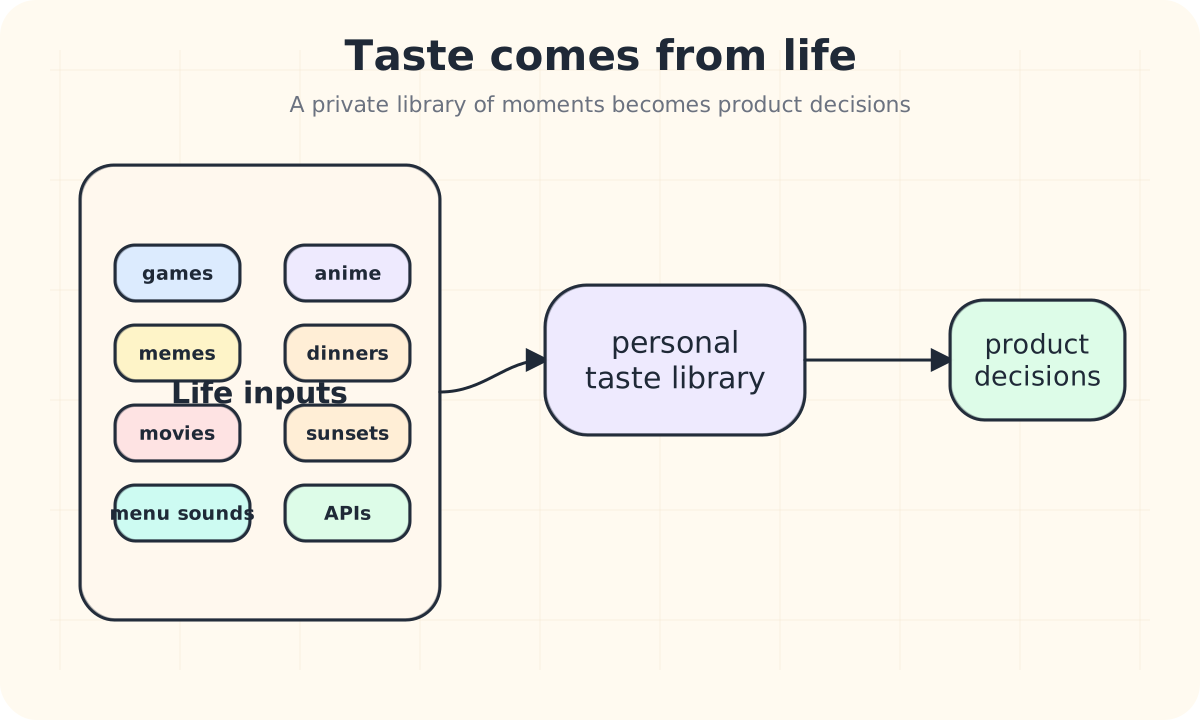
This is what I think people miss when they talk about taste in the AI era. Taste is not just knowing what looks good; it is having lived enough to know what feels true to you. Your taste signature comes from experience.
AI executes, taste directs
AI is trained on things that have already been done. That makes it incredibly useful, but also naturally average if you let it drive.
It can assemble the blocks of what you want to create. It can decide whether to use Tailwind, an animation library, Three.js, a certain structure, or a specific implementation detail. It can get you from zero to something real faster than ever.
But the desire has to come from you: the product story, the animation idea, the copy direction, the feeling you want someone to have, and the standard that says this is not ready yet. Those are still human-heavy decisions.
The best use of AI is not accepting the first output. It is rejecting weak outputs, improving wording, polishing UX, and iterating until the thing stops feeling generated and starts feeling intentional.
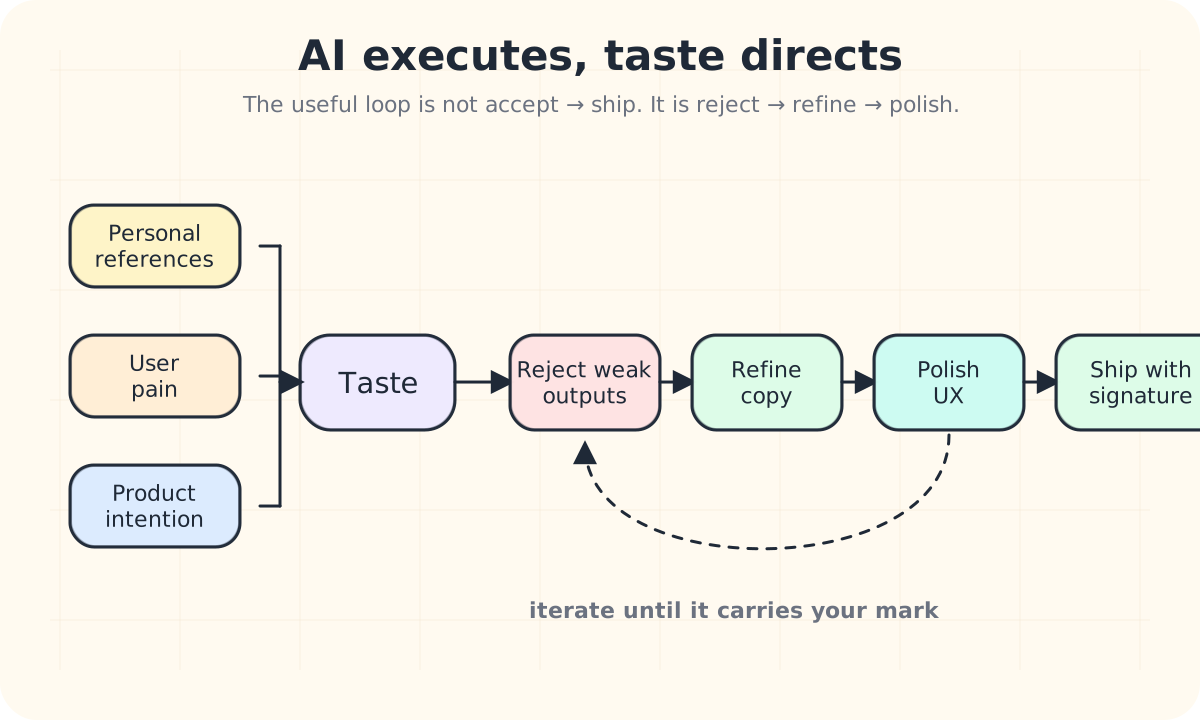
A lot of AI-generated social posts are a good example. You ask for one, it gives you something correct. The grammar is fine, the structure is fine, and the message is fine, but fine is not enough.
You can feel when the words have no owner. You can feel the AI slop: generic phrasing, random emojis, empty enthusiasm, buzzwords without tension, gradients without a point. The work starts when you ask what you are actually trying to make someone feel, then keep editing until the answer is visible in the work.
A landing page should abstract the product
A good landing page is not a list of features. It is a controlled emotional explanation: a way to make the product click before the user has to inspect every detail.
The story you tell has to reflect the product. That does not mean recreating the product inside the landing page. Sometimes the best representation is an abstraction: a metaphor, a flow, a visual system, a small interaction that makes the value obvious before the user has to think too much.
Copy is the strongest lever because copy is how people relate to the product. Good copy uses the language of the ideal customer. It touches their pain without overexplaining it. It makes the product feel obvious. The goal is not to make people think, nice tagline; the goal is to make them think, of course I need this.
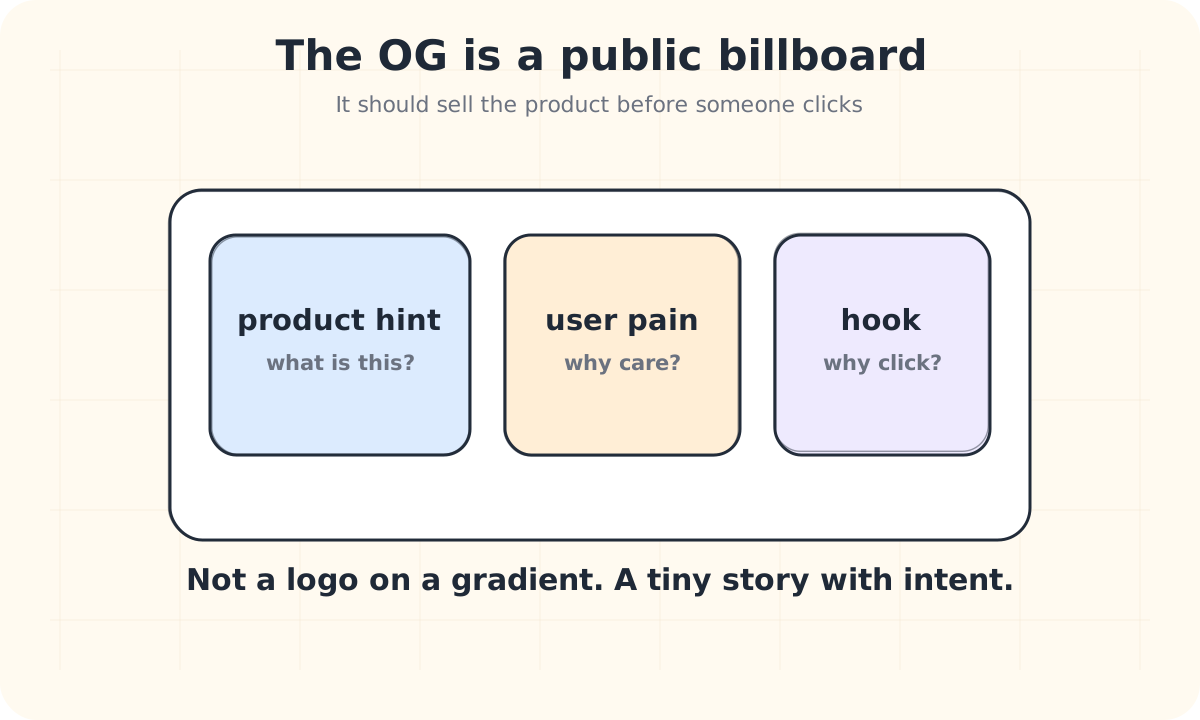
The OG image matters for the same reason. An OG is a public billboard that you get to publish for free. It should not be an afterthought. It should already hint at the product, the user pain, and the representation of what the product does.
If your product helps with inbound and outbound relationships, maybe the OG should not just be a logo on a gradient. Maybe it should show people introducing themselves. Something dynamic. Something that communicates the job before someone even clicks.
This is also why templates and component libraries are not the enemy. shadcn is a great base. It helps you move and gives you a good starting point, but using it exactly as it comes is more like a proof of concept than a ready-to-ship product.
The product becomes yours when you add a standard to it: typography, color, motion, wording, rhythm, restraint. The details that say somebody cared enough to make this specific.
Taste moves complexity away from the user
One of the simplest examples is a form.
Imagine you are building an inscription flow for users who are not very technical. They do not want to explore your system. They do not want to configure anything. They just want to be registered and move on.
The obvious version asks for everything the system needs:
name → surname → LinkedIn URL → submitBut LinkedIn is friction. Some people do not have it ready. Some people will paste the wrong thing. Some people will stop.
A better version asks for what feels native to them:
name → surname → company → submitThen the software does the extra work. It researches. It enriches. It handles the complexity behind the scenes.
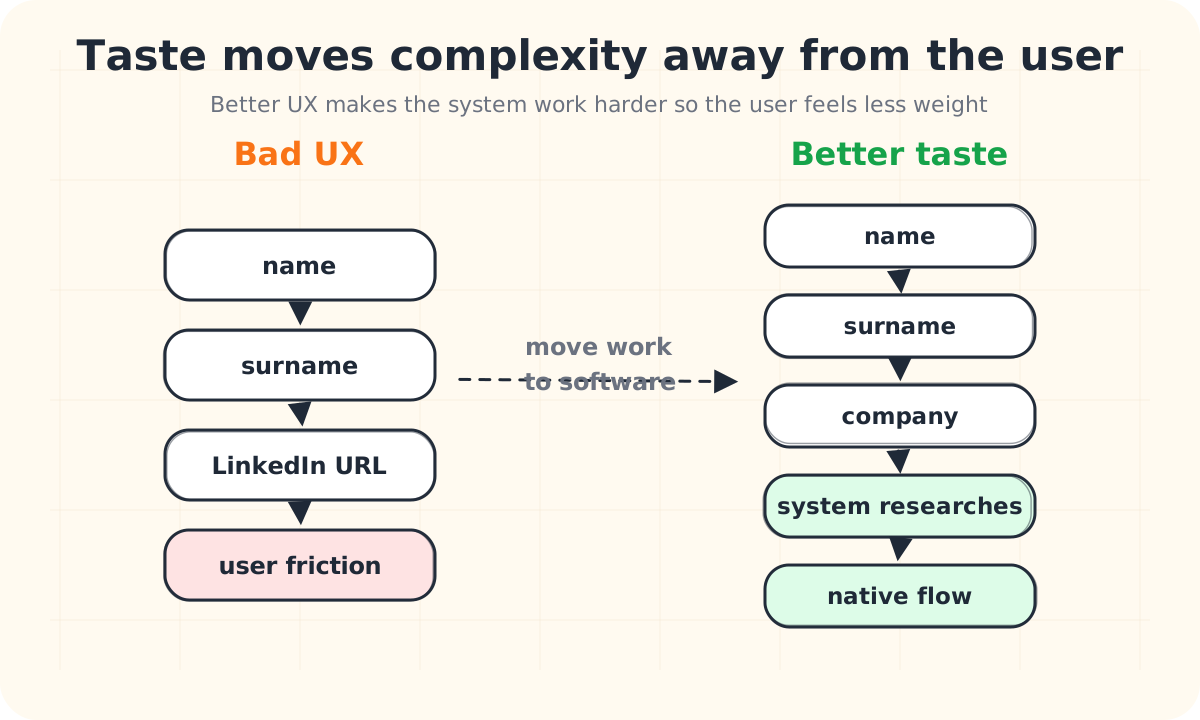
That is taste too, not because it looks better in a screenshot, but because it understands the user's real desire: I do not want to fill a perfect form. I want to be done. Taste often means making the software work harder so the user feels less weight.
Ready to ship means it carries your mark
A product is not ready just because it works. It is ready when the full user story is complete and it does not feel heavy to repeat.
If you are not comfortable with the hover animation, keep iterating. If the copy sounds like AI wrote it, keep iterating. If the OG does not sell the idea, keep iterating. If the page explains the product but does not make anyone feel anything, keep iterating.
This does not mean perfectionism forever. It means knowing the difference between unfinished and intentionally simple. Simplicity with taste feels calm; laziness disguised as simplicity feels empty. The line between those two is your standard.
How to develop taste
Look for glimpses, not only in digital products but in physical products too. In a sound. In a game menu. In an anime fight scene. In the pacing of a movie. In the way a restaurant makes dinner feel effortless. In a sunset. In a meme that says more with one image than a landing page says with ten sections.
When something triggers something inside you, stop for a second and ask why.
Was it the timing? The contrast? The wording? The silence? The color? The way it respected your attention? The way it made a complex thing feel obvious?
Then build. Compare. Reject. Refine. Copy things to understand them, but do not stop at copying. Eventually the goal is not to look like your references. The goal is to metabolize them until they become part of your own taste signature.
AI can make that process faster, but it cannot live for you. So experience life, pay attention to what stays with you, and let those references become part of how you build. When software becomes easier and easier to generate, that uniqueness might be the only thing left that truly feels human.